Entering after a correction: opportunity or pitfall?
Many investors want to “buy the dip,” but not every decline is an opportunity. In this video, you will learn to objectively assess when a pullback constitutes a healthy entry point.
- Recognizing the difference between a correction and a trend reversal.
- Read support and resistance zones as an objective point of reference.
- Wait for confirmation before you invest — with Adyen as an example.
Revisit investment course Entering after a correction
Entering a correction is a core component of structured investing. Many investors want to buy a decline, but without analysis of support and resistance, a correction is often confused with a trend reversal.
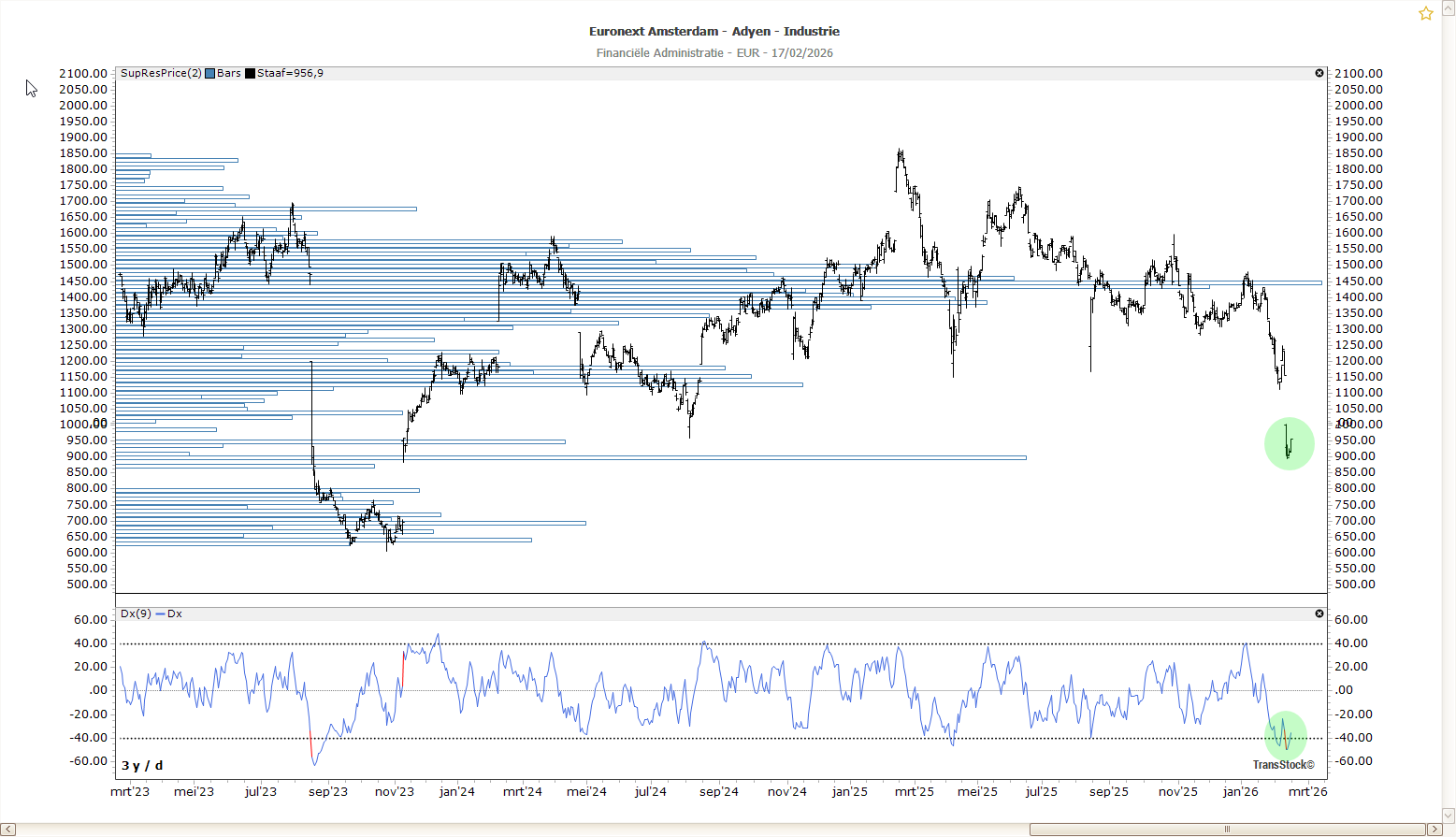
Getting in after a correction requires structure, discipline, and objective analysis. In the video (35 minutes), Mark explains when a pullback within an uptrend a healthy entry point forms — and when it does not. As a practical example, the following is examined, among other things: Adyen (Euronext Amsterdam), where horizontal support and resistance zones Clearly demonstrate how a correction towards support can constitute a rational entry point, provided this is confirmed.
What does entering after a correction mean?
A correction is a temporary decline within an existing upward trendAfter all, markets never move in straight lines. Even strong growth stocks like Adyen experience pullbacks.
What is important is not that there is a decrease, but how this decline takes place within the broader market structure.
Adyen as an example of support and resistance
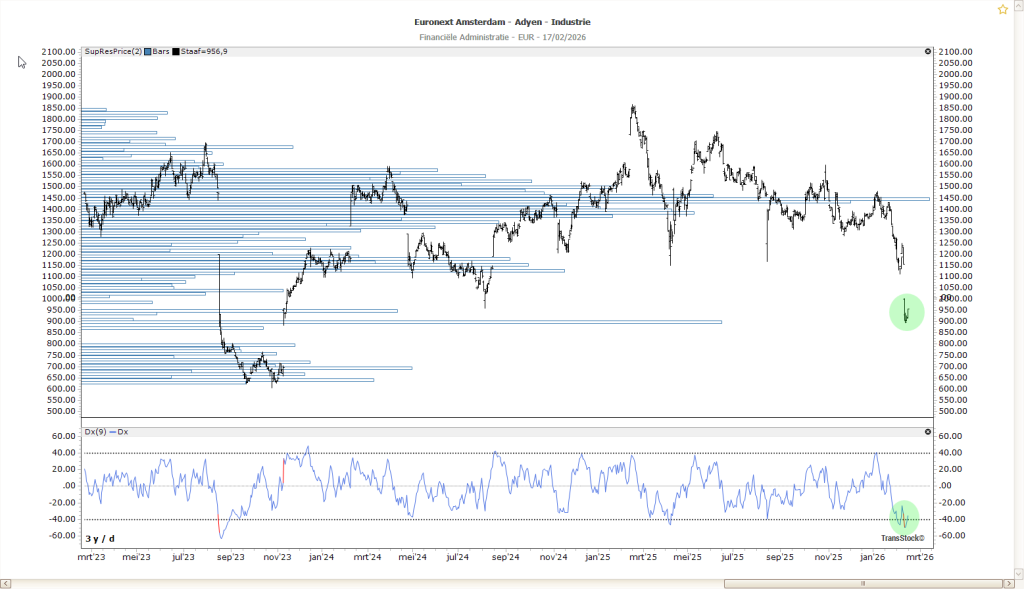
In the graph above you can see how Adyen clearly horizontal support zones visible via the SupRes indicator.
When the price falls back towards such a zone:
- Test the market for previous buying interest.
- It becomes visible where volume was concentrated.
- Creates an objective reference point for risk.
Only when stabilization occurs can a relapse evolve from “decline” to structured entry point.
When is it healthy to enter after a correction?
A healthy correction usually shows the following characteristics:
- The long-term trend remains intact.
- Support zones are respected.
- The decline is controlled, without a panic structure.
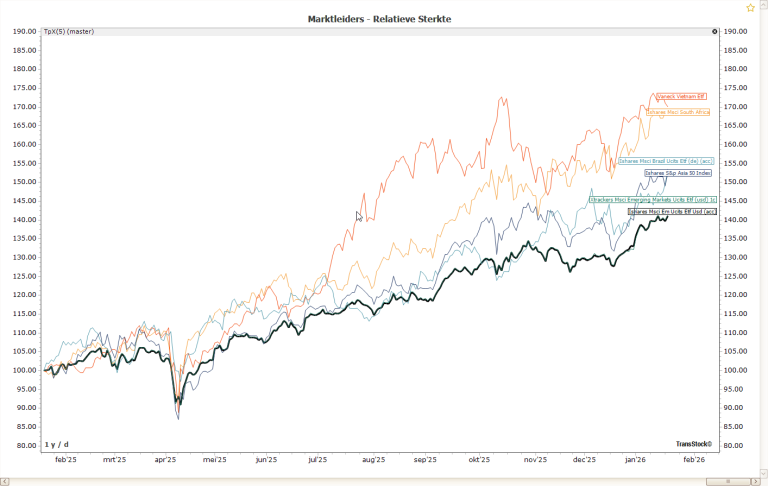
- Relative strength remains stable against the market.
At Adyen, for example, we see how previous support zones repeatedly acted as pivot points, providing structure to the decision-making process.
Support or consolidation
Wait until the price a technical support zone or consolidation zone reached — not just “a little lower”.
Stabilization
The price trend must to relax: smaller candles, decreasing selling pressure.
Trendline Breakthrough
A breakthrough of the short-term downward trend line amplifies the signal.
Confirmation
Volume of relative strength confirms that buyers are effectively taking it over.
Without confirmation, a relapse remains merely a decline. With confirmation, it becomes an opportunity within a structured approach.
Common mistakes when buying a dip
- Entering too early during an accelerating decline.
- Not distinguishing between correction and trend break.
- Enter without a predetermined risk level.
- Reacting emotionally to news.
Even with well-known stocks like Adyen, a decline can escalate quickly when support breaks. Structure prevents impulsive decisions.
Corrections as part of an investment process
Those who invest in a structured manner view corrections not as a threat, but as a natural part of market dynamics.
The combination of:
- Trend definition
- Support and resistance analysis
- Relative strength
- Risk management
turns entering after a correction not into a gamble, but a method.
Key concepts from this lesson
- Correction
- A temporary pullback within an intact upward trend, often in the order of 5 to 15%. The main direction remains upward; the decline is a breather, not a reversal.
- Support
- Price zone where sufficient buying interest existed in the past to halt declines. The more often a zone holds, the more relevant it becomes as a reference point.
- Resistance
- The mirror image of support: a zone where selling pressure slows gains. After a breakout, old resistance can become new support — exactly what you want to see during a healthy correction.
- Trend break
- A structural shift in market direction: support zones are broken and lower highs and lows emerge. Buying a trend reversal “because it seems cheap” is the classic pitfall.
- Confirmation
- Technical validation before entry: stabilization at support, breakout of the short descending trend line, and support from volume or relative strength. No position without confirmation.
- Buy the dip
- Popular strategy for buying declines. It only works within an intact trend, on recognizable support, and with confirmation — otherwise, you are not buying a dip, but a falling knife.
Further training and further education
A contribution about relative strength stocks: Where does capital shift?
Getting on board after a correction – FAQ
This publication is for educational and informational purposes only. It does not constitute an invitation to buy or sell, nor does it constitute personal investment advice.
Want to learn more about technical analysis?
Check out our investment courses and build a stronger decision-making process step by step.